Published by Nexcey Editorial Team · Researched & Fact-Checked · Editorial Standards.
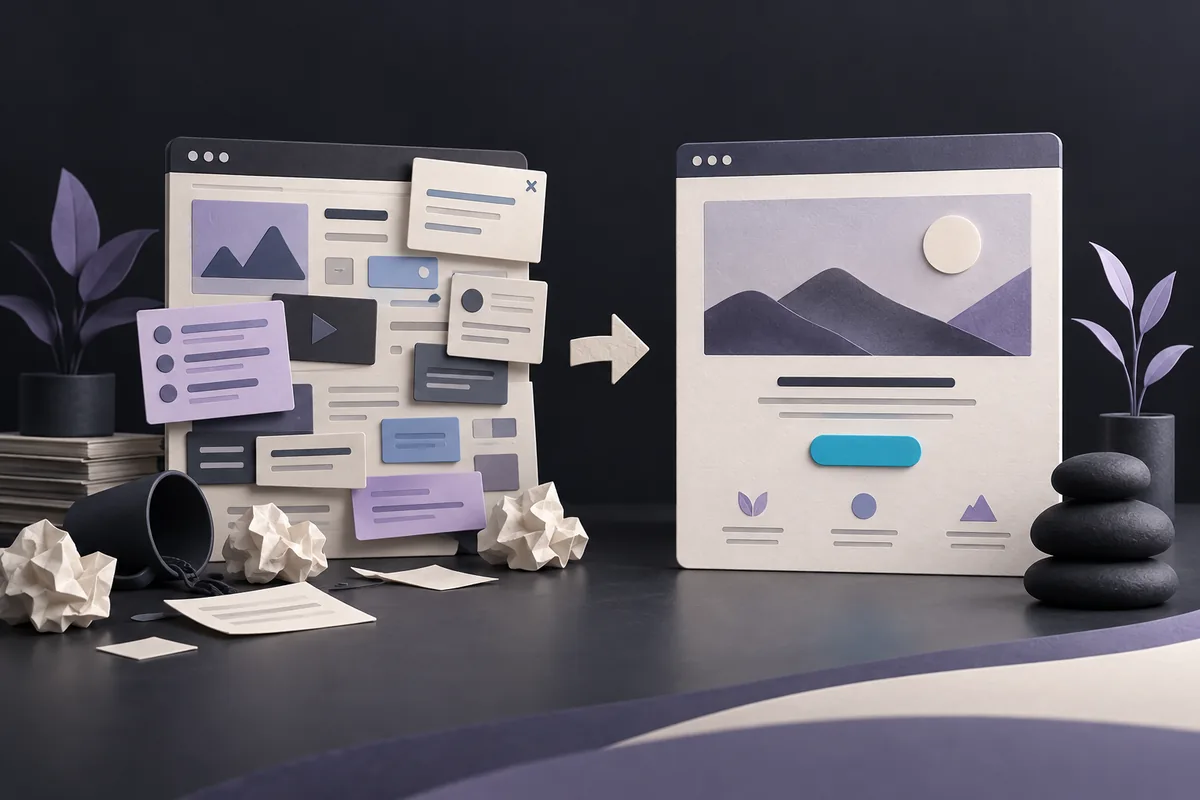
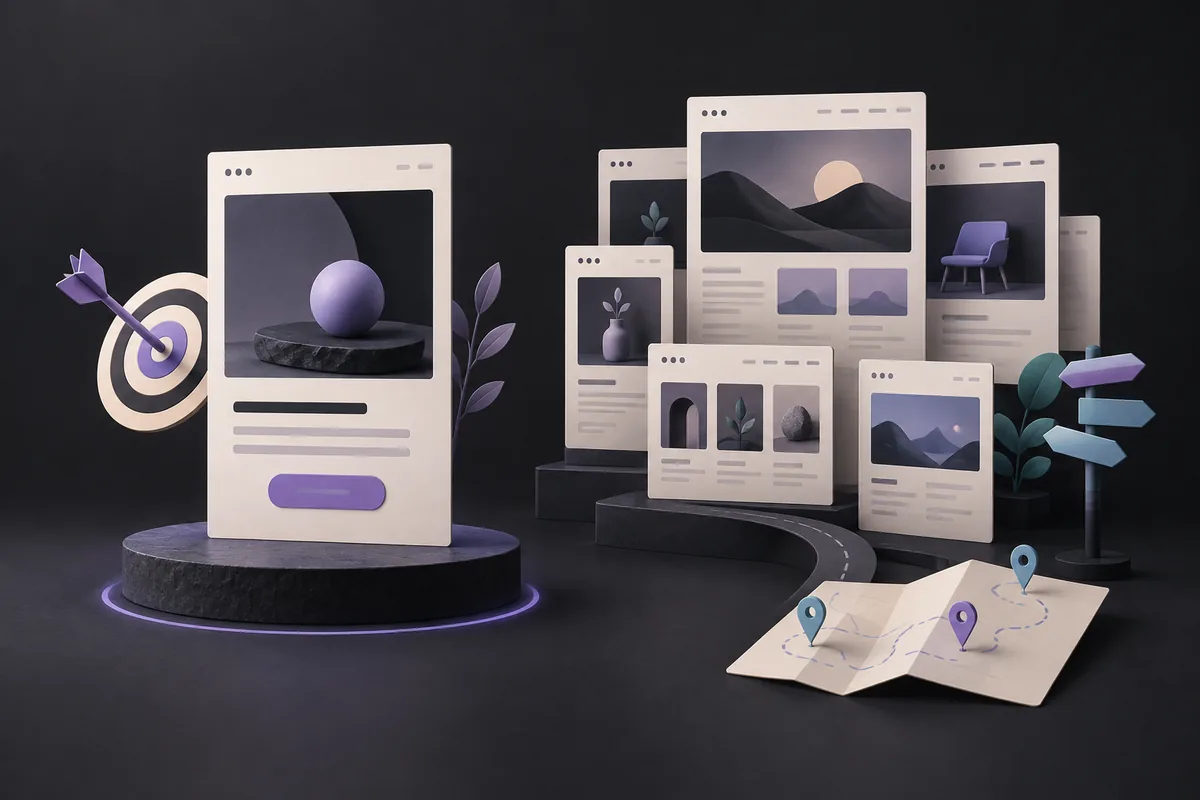
Build for the visitor you expect to arrive. If you are promoting one workshop to a clearly defined audience, a focused landing page may be enough. If visitors need to compare several services, understand your business and return for advice, a broader website has more work to do. The right first build depends on that journey.
What a landing page does
A landing page supports a specific campaign or intent and usually limits competing paths. Examples include a webinar registration, product waitlist, local-service quote, ebook download, or paid-search offer.
What a business website does
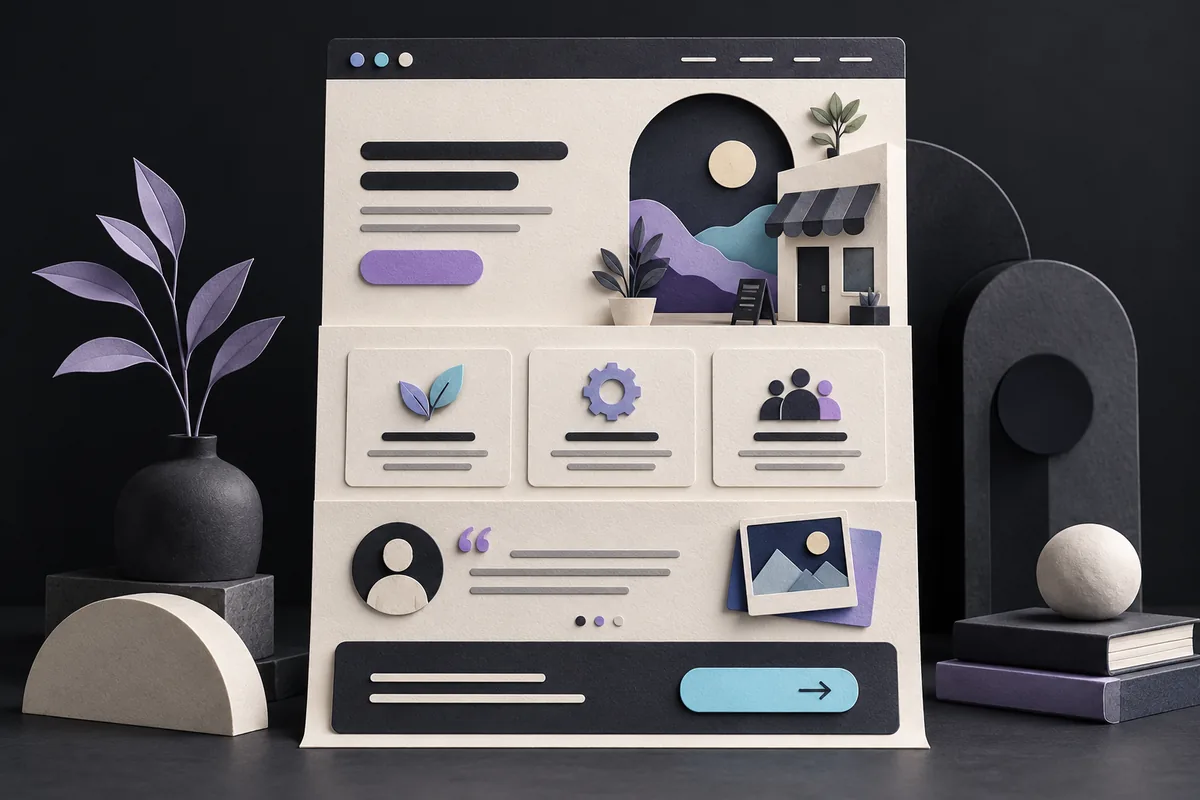
A website connects services, about, proof, resources, contact, and legal information. It serves people arriving with different questions and supports publishing, recruitment, support, and organic search. Ensure high conversion rates across all your digital assets by exploring our small-business web design guide.
Build a landing page first when
Choose it when validating one offer for a defined audience and traffic source, the decision is simple, speed matters, and one page can supply enough evidence. A focused page is particularly useful when ad messaging must match its destination.
Build a website first when
Choose it when offering several services, relying on organic search, serving multiple audiences, or requiring substantial proof. A site also fits when content publishing, local visibility, careers, support, or integrations are near-term needs.
Build both when channels differ
Many businesses need a central website plus campaign pages. The website establishes breadth and credibility; each landing page removes distractions for a specific advertisement, event, partnership, or offer.
Compare content requirements
A landing page still needs a clear promise, audience relevance, benefits, proof, objection handling, and one action. A website additionally needs a sitemap, navigation, repeatable page patterns, governance, and internal linking. If your offerings require a comprehensive multi-page presence, review our framework on how to plan a business website.
Compare measurement
For a landing page, track qualified conversion rate, cost per result, form completion, and campaign performance. For a website, also review organic landing pages, journeys, assisted conversions, and content engagement.
Plan beyond version one
If starting with one page, choose a platform, URL structure, content model, and design system that can expand. Document which evidence will trigger investment in a broader site.
Practical checklist
- Name the audience and offer
- Identify the primary traffic source
- Estimate required proof
- Decide whether search is a core channel
- List additional jobs the asset must perform
- Choose one primary conversion
- Plan analytics and follow-up
- Document the next release
Frequently asked questions
Can a landing page rank on Google?
It can, but one campaign page rarely covers a broad subject or demonstrates the depth of a structured website. Build for the real search intent.
Do landing pages need navigation?
Campaign pages often reduce navigation, but users still need essential trust, accessibility, privacy, and company information.
How long should a landing page be?
Long enough to clarify the promise, establish credibility, answer material objections, and support the action—without irrelevant filler.
Can I expand one page later?
Yes, if the platform and structure were chosen with growth in mind.
Take the next step
Choose the right launch scope with Nexcey.
Sources & further reading
What a landing page still needs to explain
A focused page should not make important conditions disappear. Include who the offer is for, what is included, the price or pricing process, timing, relevant limitations and a way to contact the business. A short page that leaves those questions unanswered is not necessarily simpler for the customer.
Think about where the visitor goes next. After submitting a form, do they receive a confirmed booking, a request acknowledgement or a sales conversation? Describe that accurately. If you later expand into a website, keep useful campaign URLs stable where possible and add navigation deliberately. Do not turn one clear offer into a crowded catalogue merely because you now have room for more links.
A launch choice for a fictional workshop
A one-day photography workshop sold through a specific campaign may need one focused landing page. A studio offering events, portraits and commercial work needs broader service information. The decision is about the jobs the site must support, not a rule that one page always converts better.
| Question | Landing page first | Website first |
|---|---|---|
| How many offers? | One workshop | Several studio services |
| Main arrival route | A defined campaign | Search, referrals and repeat visits |
| Information depth | Dates, suitability, price and booking | Services, work, team, process and contact |
| Next investment | Add broader pages when demand requires them | Add campaign pages for specific offers |
Continue with a related guide
- Small-Business Homepage Design: What to Include and What to Remove
- Technical SEO for Small-Business Websites: A Beginner-Friendly Guide